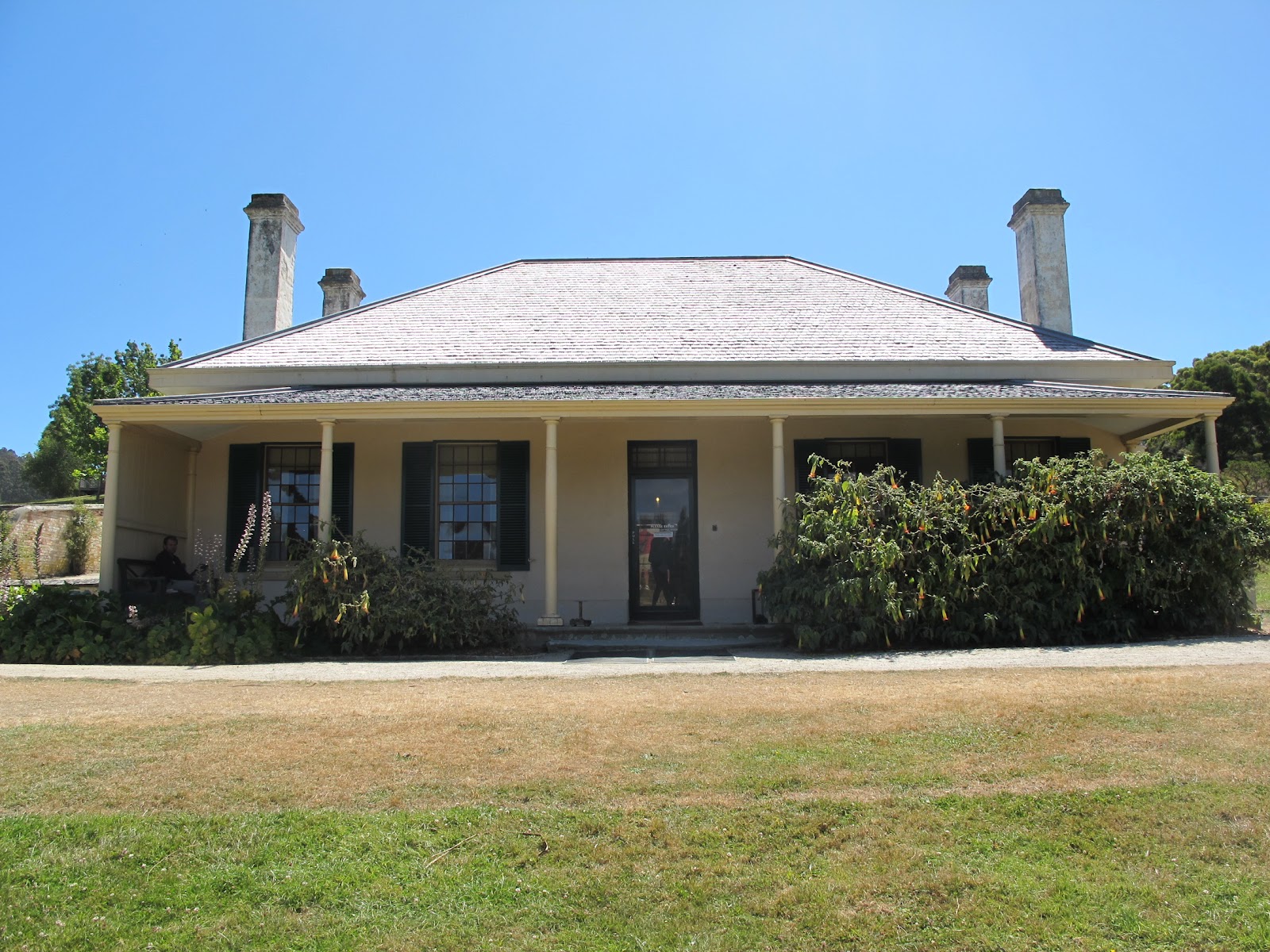
This past May, Adam and I took our first trip to Western Australia. It was such a unique experience that I doubt either one of us will every forget it. We flew into Broome and for 12 days traveled all through a part of Australia called The Kimberley's. You can read about our amazing trip HERE, HERE and HERE.
This very special area in north western Australia also happens to be one
of the largest holders of gas, coal, uranium and bauxite reserves in
the world. Just since our trip, the Western Australian
Government and Woodside have been trying to land
an industrial hub here in order to turn natural gas into liquid
gold and LNG.
The gas hub, located at James Price Point near
Broome, is opposed by local residents as well as Aboriginal groups, as
it will be built over ancient cultural
sites. There is also concern it will impact endangered species, such as
the breeding and migration zones of humpback whales.
This is only a small part of the big problem. Obviously, we do not support any gas hub or drilling off the coast of Broome. As Americans, we know what dangers lie ahead.
Please help stop this from happening by clicking HERE and to find ways to help. If nothing else, please just pass this along so that together we can help educate others and hopefully, stop this from happening.
Thank you!
Showing posts with label Flora and Fauna. Show all posts
Wednesday, November 14, 2012
Thursday, August 30, 2012
Northern Queensland Part 3: Giant pythons, baby pheromones, and exotic ice cream
This is the third part in a series on a trip to the
Great Barrier Reef and Daintree Rainforest. See part 1 and part 2…
In
addition to the "discovery" of the Daintree, the 1960s were
significant for another reason: aborigines won Australian citizenship and the right to receive the same wages as
white people. Previously, they'd been used as unpaid labor on many of the cattle
stations in Australia (and they actually weren't considered people, but part of
the "Flora and Fauna"). In return for free labor, they were allowed to
remain in their ancestral homes. With the right to be paid as equals secured,
they were promptly kicked off the land. This happened throughout Australia, but
the impact was particularly felt in the forest, which didn't become protected park land until 1981.
One of
the consequences of removing the human factor from the Daintree -- a presence
that had been around for tens of thousands of years -- was that the animal
populations fell out of balance. Aborigines had hunted and eaten pythons.
Without them keeping pythons in check, the snakes had flourished as the apex
predator and were eating their way through the mammal and bird species. The
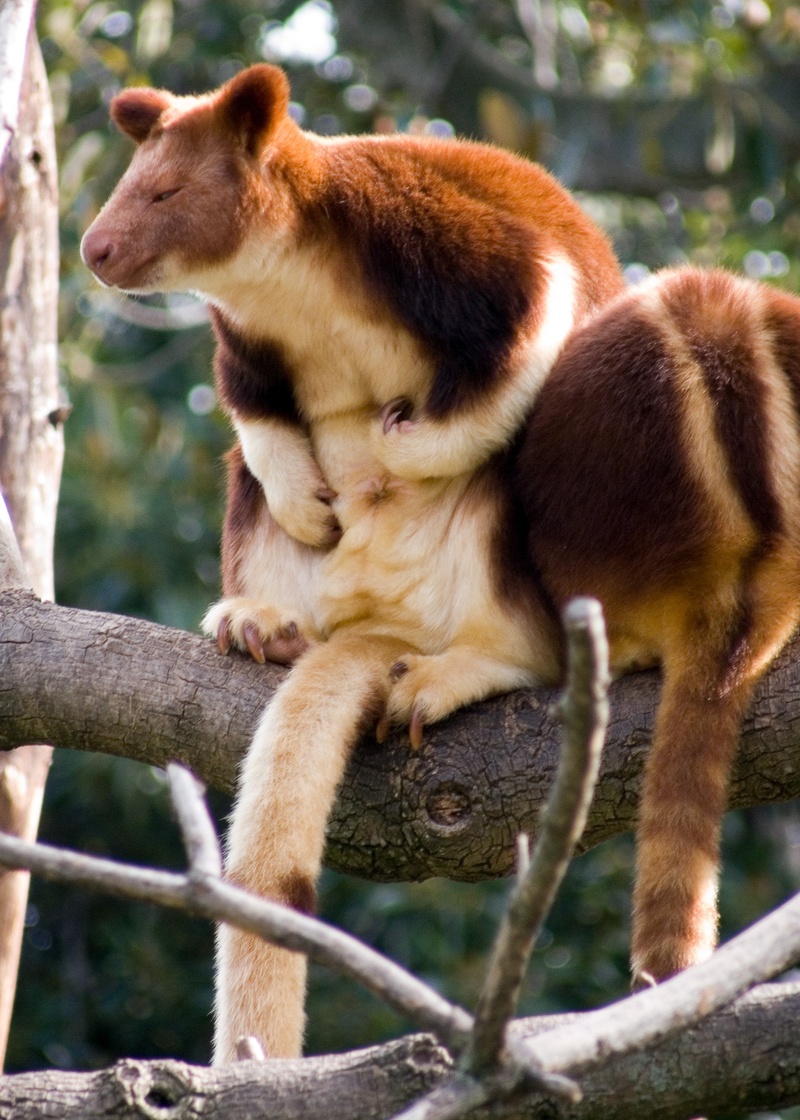
Bennet's Tree Kangaroo, a small kangaroo that lives in trees, was particularly
hard to find now, Neil said.
![]() |
| Bennet's tree kangaroo. Unfortunately, we didn't actually see one of these guys. Image source. |
The
pythons were practiced hunters. They'd often position themselves in ambushes
for long periods of time, keeping their white underbellies flush against a tree
trunk or root so they couldn't be seen, just waiting for an animal to come
along looking for a bit of fruit or a seed. Pythons were particularly drawn by
the pheromone signals put out when a Flying Fox bat was born and were wreaking
havoc on this population.
Neil had
often wondered if pythons picked up the pheromone signals of other mammals. He
got his answer shortly before his wife gave birth to their first child. An old
farmer who'd lived in the area for decades knocked on his door and told him the
tragic tale of an Italian family that lived nearby in the 1930s.
Shortly
after having their first child, the couple awoke to find a giant python in the
baby's bassinet, with the baby inside the python. In his frantic run to get
help, the husband drowned crossing a creek. The woman, devastated after the
loss of her child and husband, returned to Italy. (The property this couple
lived on was the same property Neil and his family now occupied. After the
Italian woman went home, the property was unoccupied for decades, which was
probably the reason the forest here was preserved: the logging companies
couldn't find anyone to sell it to them).
The
farmer was passing along this tale with a bit of wisdom: don't put your baby
down or you risk the same fate. Neil reasoned that, just like a newborn bat
gave off pheromones, a newborn child did the same. And since it was much bigger
it would put out more powerful pheromones, which would likely attract the alpha
python in the area. Sure enough, the morning after bringing their baby home
from the hospital, he opened the front door to see a six meter snake (that's
almost 20 feet!) circling the house. Even though the snake stopped its circling
and disappeared back into the folds of the jungle after two weeks, Neil and his
wife never let the child out of their arms for the first six months of its
life, even sleeping with it. One of the parents always held the baby so its
heat signature wouldn't be distinct from theirs--and the python wouldn't try to
attack a grown adult. Neil figured that the indigenous people would have relied
on this behavior from pythons to get themselves an easy meal after the birth of
a child.
Neil
recounted some other animal behavior that illustrated just how intertwined the
aborigines were with the forest and how their absence had thrown things out of
balance. A bird called the Black Butcherbird builds giant mounds on the ground
and buries its eggs in the mound. This way the eggs are incubated but the bird
doesn't have to risk its safety by sitting on a nest for weeks on end.
Unfortunately, this also makes the eggs an easy snack for the Lace Monitor, a
lizard that can grow to over two meters. As a result, the Butcherbird and
aborigines developed a symbiotic relationship: when a monitor approached one of
the egg mounds, the bird would cry out in a particular way and the aborigines
-- knowing exactly where the mound was -- would come running and kill the
monitor. They got a tasty meal and the bird kept its eggs safe. Thousands of
years of symbiosis dies hard and these days the birds still cry out, but no one
comes to help them.
It was,
in many ways, a magical walk, a look into a world most of us come in contact
with only a couple times a year on camping trips or day hikes, and even then
we're hardly aware of what's happening around us. My favorite parts were the
stands of giant fan palms, whose broad leaves created a roof in some places.
This hike is definitely a worthwhile activity if you're visiting the area. We
did the four hour version, but there's a two hour version as well.
After our
walk we drove ten minutes south to the Heritage Lodge for lunch. The lodge's
restaurant sits above a bend in Cooper Creak (which you can go swimming in, at
least in this part, without fear of becoming a crocodile's lunch). In the
deeper parts, the water was an amazing turquoise color. In other streams the
deeper parts might be an emerald color. These hues were causes by the mineral
content of the water, and were considered sacred places by the aborigines.
| The blue water of Cooper Creek, seen from Heritage Lodge. |
After
lunch, Sharon and I went to the beach but the sun disappeared behind some
clouds and the wind picked up, so we retreated back to the lodge. I didn't feel
like sitting in the room, though, so I convinced her to get in the car and go
explore the north side of Cape Trib, which had a short trail offering great
views of the beach and mountains. We reconvened with her parents later in the
evening and had an excellent dinner at a restaurant nearby called Whet, which had been recommended to us by
pretty much everyone in the area (and fortunately Sharon had made a reservation
there because it was quite busy).
| View on the north side of Cape Trib. |
Sunday
was the sad day on every trip where you have to fly back home to reality. But
our flight wasn't until the evening, so we could take our time getting back to
Cairns. We started with breakfast at Cafe by the Sea on Thornton Beach. Despite the uninspired name,
this small restaurant has the best location in the Daintree. It's steps to the
beach, and we sat outside under the eucalyptus trees and watched the tide go
out as we ate.
| The view of Thornton Beach from Cafe by the Sea. |
| Thornton Beach. |
Next we
stopped at the Botanical Gardens, a raised boardwalk that winds through the
forest closer to the shore. It was much different than the part of the forest
we'd seen the previous day, but was still great to walk through, and the walk
only took twenty minutes. Sharon spent much of the time trying to identify
Stinging Plants.
Our final
stop was at the Daintree Ice Cream Company, whose small shop is hidden behind
an orchard containing all manner of tropical fruits. Sharon's dad's hobby is
growing tropical fruit in his yard in Florida -- mangos, grapefruit, oranges --
so he was ecstatic. He corralled the caretaker and asked him a bunch of questions
about growing fruit. The caretaker gave us a Soursop to try. If you've ever
had a Starburst sour apple candy, a Soursop tastes like this, but not quite as
strong. The consistency of the fruit is like a creamy peach, which put me off
at first, but it is delicious. Then we walked to the ice cream stand itself,
which only offered a four flavor taster. It was fine for us though, because the
flavors were unique -- soursop, jackfruit, raspberry (ok, this one isn't that
exotic), and wattleseed (which had a coffee flavor) -- and delicious. The
orchard also has a beautiful setting, which palm trees and flowers spread
throughout.
| One of the amazing flowers in the orchard. |
| The view while eating your ice cream. |
And after
that we drove back along the beautiful coastal road to Cairns and the airport
to fly home. If you're taking the time to visit Australia (or are living in Australia), I definitely recommend spending a couple days in the Daintree and doing a walk at Cooper Creek Wilderness.
Sunday, August 26, 2012
Northern Queensland Part 2: Sacrificial Leaves, Neurotoxins, Feral Pigs, and the Jacobson's Organ
This is the second part in a series on a trip to the
Great Barrier Reef and Daintree Rainforest. See Part 1
After two
leisurely days in Port Douglas we crammed into our hatchback once more and
turned north to Cape Tribulation. We passed a few small towns but soon entered
no man's land, exiting the main road and taking a ferry across the
crocodile-infested Daintree River, which cuts Cape Tribulation off from
civilization.
The drive
to Cape Trib was stunning. A winding road meandered up and down mountains
covered in dense forest. At various points the foliage thinned out, revealing
views of beaches and the turquoise sea below. I knew we were in the middle of
nowhere when my mobile phone lost its signal. (This was a standard occurrence
with my old provider, Vodafone. I could be standing in their corporate headquarters and I still wouldn't be
able to make a call. Since changing to Telstra the coverage has been so
much better so I knew when I lost a signal we were "out there".)
| One of our stops on the way north to Cape Trib |
| View of the ocean from the road in the Daintree. |
We
checked in to the Ferntree Rainforest Lodge, a collection of stand-alone rooms
about a kilometer from where the paved road turned into a dirt and gravel track
(if you want to keep heading north, better get yourself an SUV). Then we walked
down the road to the beach. At the entrance signs warned us of crocodiles. The
water near the shore was a bit murky and it wasn't hot enough to be inviting
for a swim, but the beach was beautiful -- palm trees formed a border along the
sand, blocking any sign of humans, streams cut to the sea through the
forest, mountains rose up in the west.
We walked along the beach for a while
before coming to one of the streams, which cut us off from the rest of the beach. Sharon and I stood there a few minutes while I debated the merits of crossing: on the one hand, I could get to the other side; on the other, I could get eaten. It was a tough call. Ultimately, I decided not to cross (I think the idea of being featured on the evening news under the headline "Dumb American gets eaten by crocodile, despite signs everywhere warning people about crocodiles" was the clincher). We headed back to the lodge for a taco night special they were
offering. There's a scientific theorem that postulates the farther away you get from Mexico, the worse Mexican food tastes; we were pretty damn far from Mexico. Some places should just stick with the basics.
| Watch out for crocs! |
| Walking along the beach in Cape Tribulation in the late afternoon. |
| The tropics! |
On
Saturday morning Sharon booked a four hour private guided walk through the forest
at Cooper Creek Wilderness, a large tract of private property in the Daintree.
Our guide for the walk was Neil, a sturdily built man who lives on the property
with his wife and kids. After getting his university degree, he spent seven
years teaching aborigines in the Tanami Desert in Australia's Northern
Territory (and likely learned quite a bit from them as well) before buying the
Cooper Creek property, where his family had lived for 26 years. Because it was
part of protected area they were very restricted in how they could live -- for
instance, all their power was from solar panels or generators because they
couldn't bring in power lines from the road.
As we
walked through the forest Neil told us its history and shared with us some of
its secrets. The Daintree (named for a Mr. Daintree, not a Dain Tree) is the
oldest forest in the world, a remnant of when the planet's landmass was a vast
supercontinent called Gondwanaland. Its significance wasn't discovered until
the 1960s when it became a hot spot for hippies. Around the same time, ranchers
bringing their cattle from farther north down to the market at Cairns would let
the cattle rest and fatten up nearby. The hippies didn't like the cows
destroying the area and often butted heads with ranchers.
One day a
rancher found a few cows dying and suspected they were intentionally poisoned, despite the fact that this would be very un-hippy like. He called a
veterinarian who discovered a unique seed in the stomachs of the cows.
He sent it off to Queensland's agricultural laboratory and the researchers
couldn't believe what they were seeing when they did their analysis: it was the
botanical equivalent of finding a living dinosaur. All the biologists had been
busy studying the 20,000 year old forest south of the Daintree River, and just
north of it was a 165 million year old forest.
Logging
devastated much of the area before it was declared a World Heritage site. A
single 700 or 800 year old tree could bring in $70,000-100,000. But because the
network of vines and trees is so dense, to cut down one big tree, you need to
cut down all the little trees and vines around it to actually get it to fall, otherwise
these informal support structures will keep it standing. Simply replanting isn't a
solution because when a big cyclone comes through it will tear down any trees
without this support. Cyclones come through about once every
seven years (which means about 24 million cyclones over the life of the forest).
As Neil
was giving us this background a Cassowary wandered out of the brush behind him.
The Cassowary is a giant bird that looks like a cross between an ostrich and a
dinosaur. It's the largest animal in Australia (yes, even larger than Kangaroos
in terms of height). It's also endangered, which is why seeing one up close in the wild was
so remarkable.
| A Cassowary stepping out of the brush... |
They're endangered thanks to a surprising culprit: pigs. There are
roughly 24 million feral pigs in the Australian wilderness. About 60,000 of
them reside in the Daintree and are wreaking havoc. All along the trail we saw
spots where pigs had destroyed large patches of plant growth. They're
out-competing the Cassowary for food, which has driven the Cassowary population
down to about 1,000 birds.
Given the
precarious population the government does what it can to protect them. There
are a few dozen signs along the only road in the area warning
people to slow down for Cassowaries; these are accompanied by a varied array of
speed bumps. They're serious about protecting the birds, and with good reason.
Obviously, the extinction of the Cassowary would be tragic, but because of its
unique place in the ecosystem and its role spreading seeds in its waste (the
digestive process actually makes some species of trees "growable";
otherwise they'd just rot on the forest floor), it's estimated that the loss of
the Cassowary would lead to the loss of 30 species of plants. That's quite a domino
effect for one animal.
| Someone's modification to one of the many signs warning drivers about cassowaries. |
The
forest was a world that operated on a chemical level, remaining invisible to the
untrained human eye. As we walked around Neil pointed out some of the actors that
participate in this complex ecosystem on a daily basis.
One type of plant utilized sacrificial leaves. A single soft, pink-hued leaf would stand out
amongst the green. Any insects looking for a snack would be drawn to this
attractive leaf before attacking the green leaves. But once the pink leaf was
attacked, a chemical signal would be sent to other plants to temporarily change
their chemical makeup in their leaves, making them unpalatable. Even
crazier, the plants in one area would rotate who displayed the sacrificial leaf, so one
plant wouldn't take the brunt of the insect feeding frenzy.
| Sacrificial leaf. |
Neil also showed us a small
mushroom the size of a nail head that glowed at night to mimic the
female firefly.
This mimicry attracted the male firefly, which would pick up spores when
it
landed and spread them around when it took off. The way plant life had
evolved to exploit insect and animal life was impressive. One tree actually co-opted ants, beetles, a species of bird, and possums to keep
away would-be pests and repair damage to its bark. Another tree emitted
hydrogen cyanide, a poisonous gas, when attacked.
One tree species, called a Cycad, existed in the days before flying insects and -- since if
it ain't broke, don't fix it -- still used flightless insects for pollination. The male cycad has a dome at the top of the trunk that is home to a
number of insects. When it comes time to pollinate a female, it will raise the
temperature in its dome by about 17 degree Celsius (that's over 60 degrees
Fahrenheit). To escape the heat, all the insects will evacuate the male tree
and hustle across the forest floor to the female tree to take up residence,
taking bits of male pollen with them. When the female tree has been pollinated,
it will raise the temperature in its dome, sending the insects back to the male
tree.
Neil pointed out an innocuous looking plant, which has various named, but is generally called the Stinger or Stinging Tree. This is Australia's typically more
venomous version of plants found in the rest of the world, like Poison Ivy.
Touch its leaves and silica-tipped hairs will deliver a nasty neurotoxin. The excruciating pain the toxin causes can last for months and often requires hospitalization. An Australian Geographic article covered some of the consequences of contact: horses going mad and jumping off cliffs in agony, a military officer who shot himself after using the leaves as toilet paper, and pain returning years after exposure simply from taking a cold shower. The British were allegedly investigating its potential use for chemical warfare back in the 60s. Given the wide berth most animals give this plant, other species of plant have evolved to resemble the Stinger as a defensive ploy.
This plant
gave off no smell or other hint of its danger, but Neil commented that if you brought an
Aboriginal elder near a Stinger he likely would know he
was close to one even if he couldn't see it. This comment came up because I was joking
about a particular seed we passed. The seed looked like a cobalt blue egg and
was a favorite snack of the Cassowary. Neil mentioned that aborigines could eat it
after some significant processing and I quipped that the first person to eat it
probably died, so the second person prepared it a different way and he died, so a
third person tried it a new way, and on and on until someone figured out a
recipe that wouldn't kill you. Very persistent people, I said.
![]() |
| The aforementioned blue seed. |
The more
likely situation, however, was that the aborigines were so in tune with the
environment that they would have known just how to prepare it to neutralize any
toxicity, just as animals somehow know which berries are safe to eat. Neil talked about
how, after 26 years living in the Daintree, he was much more aware,
unconsciously so, of his surroundings. (He amazed us on numerous occasions by
pointing out insects on trees that were so well camouflaged you had to look
hard to see them even when he pointed right at them. Imagine what he might know
if he'd spent the first half of his life in the forest, coupled with knowledge
gained and passed down through millennia.)
Much of
this aboriginal "sixth sense" would have been thanks to the
Jacobson's organ, found at the base of the nasal cavity, he said. The organ detects
pheromones, which are the chemical messengers of the forest. While studies on
whether adult humans have a functional Jacobson's organ are inconclusive, Neil
surmised that the Jacobson's organ in someone who'd spent his life in the
forest would be much more developed than a city boy's, and that most of the
studies have probably been conducted on people who did not spend their lives
living in the wild, so to speak. It was an interesting idea, and served to
remind us how detached from nature our lifestyles have become.
To be continued...
Wednesday, August 15, 2012
Northern Queensland Part 1: A parallel universe in the Great Barrier Reef
Sharon's
parents were brave enough to suffer through the 20+ hours of traveling it takes
to get from Tampa, Florida to Sydney, Australia, and spent a couple weeks
visiting us here. On her mom's bucket list was the Great Barrier Reef, so we
planned a short excursion up to northern Queensland. Since her parents were
coming from a Florida summer (read: very hot and humid), Sydney's rainy winter
was a bit of a shock. And since apartments here don't have central heating,
they were huddled up in front of our space heater. The warmth of the tropics
was going to be a welcome escape.
But as we
sat in the Sydney airport, delayed hour after hour thanks to some fog that
perched itself on top of the runway, it looked like we might not be going
anywhere. We used the time to book some excursions and I tried out my new iPad
by sketching Australian animals. It's been a long time since I doodled and I
enjoyed it. And finally the fog lifted and we left.
![]() |
| One of my drawings. |
The
descent into Cairns (pronounced more like "Cannes" -- the French city
-- than "Kairns"), the biggest city (and I use that term loosely) in
northern Queensland, was amazing. As we passed over the ocean, patches of light
turquoise blue-- indicating where reefs were -- stood out from the azure water.
Lush mountains sloped down to the sea. While I knew that Australia boasted a
varied landscape, if you had shown me a picture I would have thought this place
was in tropical southeast Asia.
| A lot of blue from the window... |
We picked
up our rental car, a small hatchback that was a bit snug for four people, and
turned north on the main road (ahem, the only road) to Port Douglas, the
jumping off point for exploring the reef in the area. For the first few miles
outside of Cairns we were subjected to roundabout hell. In lieu of traffic
lights, the traffic authority left all the motorists to luck and fate and
installed huge roundabouts at every intersection. It might have been a better
experience in a sports car, but the hatchback didn't exactly hug the curves.
But after a while the roundabouts gave way to smooth, uninterrupted road.
We passed
sugar cane fields and banana plantations, the mountains always a short distance
behind, and occasionally were treated to spectacular views of the ocean and
coastline ahead. It's Australia's answer to the Pacific Coast Highway in California. About an hour and a half later we rolled in to Port Douglas.
Port Dougie, as it's called, is a charming town, flanked on one side by Four
Mile Beach and on the other by the ocean and wharf where all the fishing,
snorkeling, diving, and leisure cruise boats depart. Four Mile Beach, I
learned, often hosts saltwater crocodiles, but we didn't see any when we went
for a walk after checking in to our hotel.
Because
of the delay in Sydney, the day was mostly over. We got some dinner and went to
bed.
The next
morning, on Thursday, Sharon had booked a snorkel tour of the outer reefs
(which is apparently better than the reefs closer to shore). It was warm and
sunny and promised to be a great day. Some of the snorkel and dive operators
have enormous boats that hold over 100 people. We didn't want to have such a
commercial experience or share the water with so many people, so we'd found a
catamaran that held about 35 people. As we cruised towards the outer reefs on a
calm sea I picked up the accents of the other guests -- most were American. Two
dolphins passed us by and a short time later we caught up with a few humpback
whales.
| View of the coast as we headed out towards the reef |
The boat
had three planned snorkel stops, all offering something a bit different. When
arrived at our first location Sharon and I dove in sans wetsuits. After all, we
were in the tropics. However, it was still winter and the water was cold. We
retreated back to the boat, donned some wetsuits, and -- appropriately clothed -- jumped back in.
From deck
of the boat you could see where the reefs were because of the colorations of
the water, but its secrets were still hidden. But as soon as we ducked our eyes
below the surface of the water, a parallel universe was revealed: thousands of
multicolor fish, forests of coral, giant clams, sea cucumbers (and yes, we saw
the Little Nemo fish: quite plain compared to some of the other species). It
was unlike anything we'd ever seen. With the buoyancy from our wetsuits, we
spent a lot of time just floating in place, watching the fish swim around, and
wondering at the incredible variety of life on this planet.
![]() |
| Brain coral. |
The
second reef we stopped at had the best coral. Tentacles of dark purple coral
rose from the ground and spread for yards in all directions. Giant brain coral
that was hundreds of years old We even saw a reef shark, which I tried to
follow for a while as it lazily moved through the water.
Our third
snorkel spot was difference once again: two massive pillars of coral rising
from the sea floor. This spot had the most vibrant collection of fish. I also
saw a large octopus gliding along the surface of the coral. We were mesmerized
by the beauty. If the cold hadn't finally gotten to us, we could have just
floated there for a long time.
![]() |
| If our camera didn't suck, this is what our photos would look like. Image courtesy. |
Our boat
returned to Port Dougie in the late afternoon. There was some excitement on the
boat when the captain received a radio call the an albino humpback, the only
one in the world, was in the area after disappearing for a couple years, but we
unfortunately couldn't find him. After cleaning up at the hotel, we hit the
town for some dinner and ice cream and prepared to head further north, to Cape
Tribulation and the Daintree Rainforest on Friday.
Saturday, August 4, 2012
Crazy Ass Birds!
The last time I was in Miami I was amazed at how many iguanas’ I saw. Once, while walking with my sister we saw 20 iguanas chilling in a bush. After riding the NYC subways for 7 years, I was still surprised when I saw a rat scurry by. Yuck!
But now living in Australia we have those Iguanas and rats beat! They have the largest and most diverse range of birds that I have ever seen… or heard. Some are beautiful while some not so much but ALL are loud!
Not only are they loud but also they are very intrusive! Not sure where these birds learned their manner but it wasn’t in Casa de Laufer. Adam and I have had birds fly into our kitchen window or balcony door on many occasions! Some just come in for a look around, some take food and some even poo on carpet. The nerve of these birds!
Here are a few of the birds that have visited our balcony.
But now living in Australia we have those Iguanas and rats beat! They have the largest and most diverse range of birds that I have ever seen… or heard. Some are beautiful while some not so much but ALL are loud!
Not only are they loud but also they are very intrusive! Not sure where these birds learned their manner but it wasn’t in Casa de Laufer. Adam and I have had birds fly into our kitchen window or balcony door on many occasions! Some just come in for a look around, some take food and some even poo on carpet. The nerve of these birds!
Here are a few of the birds that have visited our balcony.
Man, these are some crazy ass birds!
Friday, July 20, 2012
Shark Week - The Australian Version
![]() |
| The deadly Wobbegong. And by "deadly" I mean "lazy". Look at it just laying on the ground. |
As a child I was really into sharks. I had a cool shark book with pictures which I read about twice a week and a National Geographic video on sharks which also got a lot of play time, although that's probably because every other movie in the house was from Disney so options were limited.
When I was 8 my parents announced they were taking the family on a short cruise around the Florida Keys and the Bahamas. I was 100% certain there were no sharks in Pittsburgh, but goddamn if there wouldn't be a lot swimming around in the ocean. In particular, I was interested in the Wobbegong Shark, which tends to lie in shallow waters and blends in with rocks. All the better to attack it during shore excursions, I thought, given that I didn't have a boat (never mind that it doesn't actually live anywhere near Caribbean).
In preparation for this adventure I judiciously took all the plastic tent poles out of the basement and filed the ends down to a sharpened point on our cement driveway. I was crushed when my mom said I couldn't take my collection of spears on the plane. I had made like 20 spears, and now could neither hunt nor go camping again. I still blame her for ending my shark hunting career before it started. I could have been huge in Japan.
While my obsession with sharks has passed, I still do have a fascination with them. They're such mysterious creatures and are only in the news under dramatic circumstances: someone lost an arm, a surfer got bitten in half, a shark is dating a Kardashian, and so on. This is particularly true in Australia where Great White attacks are rare but still bring back memories of Jaws and the idea that sharks are out to hunt us. (Interesting aside: shark attacks used to be referred to as "shark accidents" since they're not intentionally trying to eat humans). It's no wonder the Discovery Channel's Shark Week consistently gets high ratings.
As it happens, Sharon's parents are in town for a visit and we'll be taking a short trip up to Queensland and the Great Barrier Reef next week. Guess who inhabits the waters around Queensland? My little friend the Wobbegong. Shark-tooth necklace or bust, baby!
*I don't actually condone killing sharks. Animals are awesome.
Sunday, April 15, 2012
Unwelcome Houseguests
Most birds flutter away at the first approach of a human. Even the pigeons of Manhattan's Central Park scatter to avoid walkers, joggers, and dogs. The birds of Sydney, I've discovered, are confident birds; they aren't fazed by humans and do what they want.
When we first arrived in Sydney, our initial abode was an apartment in Elizabeth Bay overlooking the harbor. I was at the table doing work when a bird ducked under the partially open kitchen window, strutted along the counter, took a grape in its mouth, flicked me off (well, he would have if he had fingers), and then strutted back out . Later he came back and hopped into the sink for a drink. It was only a matter of time before he stole food out of my hand, I thought.
A few Saturdays ago, Sharon and I went to the Picasso exhibit at the Art Gallery of New South Wales. After the exhibit we went to the museum's café for a snack and I grabbed a small table outside.
The patio was full of Lorikeets, which are beautiful green parrots with splashes of red, orange, yellow, blue, and purple about the height of a water bottle. They fluttered from the underside of one table umbrella to another. The bolder ones perched on chairs or hopped on tables to snatch food. One actually balanced on the edge of a woman's glass. At one point I saw a bird literally sitting on a girl's head.
![]() |
| Lorikeet. Cute and cuddly? Maybe. Bad house guests? Definitely. |
Unfortunately, it seems, our new place in Bondi is not safe from the boldness of these winged critters.
Sharon and I have been leaving the very large sliding door to the balcony open pretty much all the time since moving in January. I've got a large wooden duck that sits on the side table nearest to this door. Sharon pointed out a small white spot next to it and said she thought it was bird poop. I thought the odds of a bird having the nerve to come indoors or the sense of irony to poop next to a fake bird were unlikely and figured it was dried yogurt or something.
A few days later Sharon pointed out additional white splotches on the carpet and in our kitchen. It was undeniable: birds were coming inside while we were asleep or at work and making themselves at home, which included christening the floor. We now keep the door closed when we're not around and I don't find Lorikeets quite so cute.
Sharon's recently started a love affair with a Kookaburra that she saw sitting on our balcony. Every morning she wakes up and checks it he's there. But it's only a matter of time before he overstays his welcome.
Wednesday, April 11, 2012
Good morning Kookaburra!
Yes... this post is solely to show you the big bird that was sitting on my balcony this morning when I woke up.
Just in case you wondering this is a Kookaburra, native to Australia and New Guinea, these birds usually grow to be up to 17 in.
Kookaburras are best known for their unmistakable call, which sounds uncannily like loud, echoing human laughter. Not pleasant to wake up to.
Sunday, February 26, 2012
Tasmania in Four Days: Part 2
We were glad to put Orford and the East Coast Resort behind us as we made our way to Port Arthur, a historic penal colony way down in the southeast of Tasmania, on the Tasman Peninsula.
Sharon, who was the master planner for the trip, had a couple stops scheduled for us along the way. Shortly after crossing a narrow strip of land onto the Tasman Peninsula, we made a slight detour through Doo Town, a tiny village overlooking the water (as most towns do in Tasmania), to see two geological formations: the Tasman Arch and Devil's Kitchen.
The Tasman Arch was, a very long time ago, a giant sea cave. Eventually, part of the roof collapsed, creating a huge arch. You can walk onto the arch and get a great view of the southern end of the Tasman Peninsula. Near the Tasman Arch is another site called the Devil's Kitchen and we hiked the short distance to it.
| Tasman Arch |
"So this is the devil's personal kitchen?" someone joked on the way.
"Hope he cooks us breakfast," Sharon quipped.
"Deviled eggs, of course," said Alex.
Like the arch, this was also once a sea cave but the entire roof caved in, so that now it's a long, deep rectangular-shaped gorge cutting into the sea cliffs. Nothing about it suggested "kitchen" or "devil" in my mind so I think someone named it just to add a sense of drama and attract visitors. We took it all in for a few minutes and then headed back to the car, which was by now a light shade of dust from our travels.
| Looking down towards one end of the Devil's Kitchen. Yep, I didn't see it either... |
Another thirty minutes down the road, we stopped at the Tasmanian Devil Conservation Centre, which had been recommended to us.
The Centre had somehow photographed a devil in a moment of cuteness and used that as the face of their advertising. Sharon couldn’t wait to see one up close and personal. Moments of cuteness are few and far between with these animals, however. About the size of a large house cat, they look like overgrown rodents. Their hips seem too low for their shoulders, so they don't run so much as lurch. They are awkward looking creatures.
| The cuddly Tasmanian Devil. |
Sadly, they are facing extinction due to a mouth cancer transmitted when they bite each other (which is all the time). They get particularly violent around mating season. The males fight viciously for the right to mate, and the victor then assaults the female to make her submit.
The Centre had roughly 30 Devils spread across a collection of natural enclosures. Eventually they'll be released into the wild. We happened to luck upon a feeding, which happens very inconsistently -- Devils are scavengers, so to replicate the conditions they'd face in the wild, sometimes they aren't fed for days.
The keeper came to the enclosure with a bucket of indiscernible animal chunks. The Devils, knowing what was coming, stood on a rock and began growling. This isn't a growl like a bear or dog or lion; it's almost whispery in a way. Early settlers thought the sound was the devil talking, which is where the animals got their name.
When a chunk of animal was thrown into the enclosure, the quickest Devil picked it up and took off running. The other two sharing the enclosure took after him. They ran in circles around a mound over and over and over. One lagged so far behind that if he had just stopped and turned around, the leader would have run right into him. These aren't smart creatures, apparently. The keeper threw in a couple more chunks to make sure they all got a share and didn't destroy each other over one piece.
Neighboring the Devils was a yard full of kangaroos that had been brought here for various reasons and were all now thoroughly docile. You could walk right up to them and give them a scratch between the ears or a stroke on the back. Even a female who had a young joey residing in her pouch didn't seem alarmed at having humans nearby.
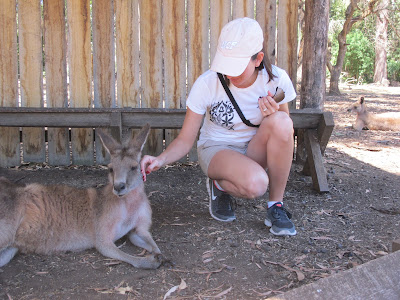
| Sharon giving a 'roo a check scratch. |
| It's probably time this dude moved out of the pouch. |
We ignored the collection of birds since we're not really bird people, washed our hands, and headed, finally, to Port Arthur.
Australia started out, at least for Europeans, as a penal colony. Britain decided it needed to shore up its presence in this part of the world and had a growing criminal population, so what better way to build infrastructure and harvest resources than with convict labor? Thus began the practice of shipping convicts to Australia. Britain's innocuous sounding name for this policy of involuntary emigration was "Transportation".
While many convicts sent here were hardened criminals, some were young boys who had simply been caught stealing bread. In Victorian times, you were considered in the eyes of the law to be fully accountable for your actions at the age of seven, and could even be put to death at the age of eight.
Until recently, the whole convict thing was a black mark on Australia and families were ashamed to have a convict in their ancestry. Now it's desirable to have one in the family history; it's the closest Australia has to royalty.
Port Arthur was by no means one of the earliest penal colonies in Australia; built in 1830, it came 42 years after the first one was established. It was one of several sites created specially for the repeat offenders in Australia: after you were sent to some other penal settlement, if you still exhibited criminal habits you were then sent to places like Port Arthur.
| View of the main dormitory for prisoners. |
It was built as the latest experiment in criminal rehabilitation (a quest we're still pursuing to this day). In this model, which was in vogue in Britain, criminals would be organized into various groups based on their crimes and the type of labor they would perform. Skilled convicts, such as bakers, tailors, and blacksmiths, got better jobs than unskilled convicts. Petty criminals also got assigned better jobs than those who'd committed more serious crimes. The idea was that convicts would be rehabbed through physical work, and the system was structured to allow them to rise through the ranks, as it were, and get special privileges -- all with a goal of making them see that they could enjoy a good life if only they behaved and followed the law. In fact, many convicts were released and became pillars of their communities using skills they learned.
But this was without a doubt a hard place. One man had broke his clavicle working in the mill and the doctor decided his whole arm had to come off. The medical team allegedly cut through the shoulder with a whale-bone saw (with no anesthesic, of course) and then cauterized the opening with a red hot cooking pan. The man was put back on the workforce after three days.
In the 1850s a new model on the best way to straighten out criminals was exported from England to Tasmania. This model focused on keeping prisoners in solitary confinement. Only in this manner, prison reformers decided, could sinful men truly have the opportunity to reflect on their ways and find salvation in God and a path of righteousness.
| View down the hallway in the Solitary Confinement building. |
A new wing to implement this model was constructed. Men placed here were completely segregated from all human contact. This was done so thoroughly that even orders from guards were communicated using bells, not spoken. When these prisoners were allowed outside for their 1 hour a day of exercise, they had to wear hoods.
Really, as we know now, solitary confinement makes men crazy, and it wasn't long after this building came into existence that an insane asylum was erected next door.
Nowadays it's hard to believe this was a place of sorrow and hardship. The site is centered around a flat area next to a natural harbor. Gentle hills slope down to this point; on one side the sandstone ruins of the prisoner dormitories stand; on the other there are large houses (large for the day, anyways) with well-tended gardens that once housed the soldiers, reverend, doctor, and other free people who spent part of their careers at Port Arthur. The park staff have been working to recreate a large garden as it existed over 150 years ago.
| View of the civilian grounds. |
| The doctor's house. |
| The old church, which was gutted by a fire. |
| Vandalism from 1933. |
After wandering around for a while we decided we'd seen enough of the place. We left Port Arthur and drove back up the Tasman Peninsula and then southwest over to Hobart, the capital of Tasmania and its largest city. "Largest" doesn't necessarily mean "large", however. With a population of just 200,000 Hobart is still smaller than Wollongong, a satellite city of Sydney. But after driving through mostly empty landscapes, it seemed downright overbuilt.
We checked into a standard city hotel and were relieved to see other people staying there. It looked like we might just survive the trip. We got ourselves cleaned up and went out to explore the city. My initial take of a bustling city was mistaken: the streets were for the most part empty. We walked down the few blocks to the harbor, which was full of fishing boats, then headed over to the "hip" neighborhood, Salamanca, known for its Saturday market, restaurants, and bars. It's basically one street near the water with charming old buildings. We strolled along scoping out a bar to sit at and quickly ran out of sidewalk -- Salamanca isn't very big.
| Hobart: this is as exciting as it gets. |
We went to a James Squire pub and did flights of their beers (or paddles, as they called them, since the glasses came in short, modified paddles). Afterwards we went to Smolt for dinner; this was a restaurant recommended to us by some friends of friends in Sydney. We all splurged on a nice meal, but the overall impression was that it wasn't worth the money. We grabbed a drink afterwards and then crashed back at the hotel.
Sunday was our last day in Tasmania. We had planned on going to the top of Mt. Wellington, a mountain that casts its shadow over Hobart, and then continuing on to MONA, the Museum of Old & New Art. We'd been running ragged each day of the trip, though, and decided to end on a leisurely note, so ditched Mt. Wellington from the plan.
For brunch, our hotel recommended another hotel, the Henry Jones Art Hotel. This was a former jam factory that had since been turned into a cool art hotel that received several architecture and design awards. I had tried to book our stay in Hobart here but it was sold out. They had multiple restaurants in the complex and we picked one. The service was ridiculously slow. After only 16 hours or so, I was already bored with Hobart.
We then hopped in the car and drove to MONA, a museum opened in early 2011. MONA is exists thanks to David Walsh, a native of Hobart and college dropout who used his knowledge of mathematics to win millions of dollars gambling. Since earning his fortune, he's spent an estimated $100 million collecting various pieces of art and decided to erect a temple to hold it all, which, he confessed in an interview, had destroyed all of his wealth and actually put him in debt. It's an impressive structure from the outside: built into a hill, it overlooks the harbor and hosts its own winery, a number of restaurants, and several penthouses that can be rented out by guests.
To start your tour of the museum's works, you go down several levels after entering and then work your way up. None of the art is labeled. Instead, you are provided with what must be the coolest museum gadget ever: a modified iPod Touch with a custom app. With the touch of a button, it determines where you're located in the museum and displays the art in your vicinity. You just click on the ones you want to learn about.
Each work had four types of information. One button showed you the basics of who created the piece, and when, and using what materials. There was one called "Art Wank", which displayed the oftentimes obtuse description of the meaning of the art piece and why it was unique and how the artist thought it represented the world and all the fluff that normally just makes me roll my eyes, so I thought the button was titled appropriately; one called "Thoughts", which had random comments from the artist and the founder; and one that let you express your opinion.
This last option provided comic relief. If you liked something, it might say something like "74% of visitors shared your worldly good taste" and if you disliked something, it might say "3,820 other people were also simple-minded jerks".
As the name of the museum implies, there is both old and new art to be found. An Egyptian sarcophagus sits near a bloated Porsche called the "Fat Car"; Greek pottery is surrounded by modern paintings. One enormous work of art entitled "Snake" was in storage for 40 years and takes up the entire wall of a large room; Walsh's purchase of this piece was the impetus for building the museum since it required so much space.
There were several machines that actually replicate the process of creating human waste. As in #2. Yeah, machines that make #2. It reeked. Is that really art, I found myself wondering at several points. And that's exactly what Walsh wants: to be the anti-standard art museum; he wants to make people think and expects to offend. In one interview he even said he expected -- and hoped -- that people would deface some of the pieces. He has a secret apartment built into the museum, with a clear floor in spots so he can gaze into the largest room.
| The poop machine. |
| Fat Porsche. |
| Something old... |
| The giant piece of art that was the impetus for the museum. |
We exited with a couple of hours to kill before heading to the airport. At 33 degrees Celsius (about 92 Fahrenheit), this was one of the hottest days in Tasmania in recent history and made it too hot to wander around outside. We grabbed a table on the terrace of a very slick wine bar on site and ordered up some drinks and snacks.
Finally, it was time to head to the Hobart International Airport. This airport had 4 gates, and I suspect that's two more than they need. It was a tiny place, and I couldn't imagine having to spend much time there. Luckily, Sharon and I didn't. Unluckily, Alex and Michelle had about 4 hours to kill. We'd be home in Sydney before they even took off. Overall, it was a great trip and we had a lot of fun.
Next trip: the Kimberley region of Western Australia.
Subscribe to:
Posts (Atom)